
Enhancing Rehabilitation with Brain-Computer Interfaces
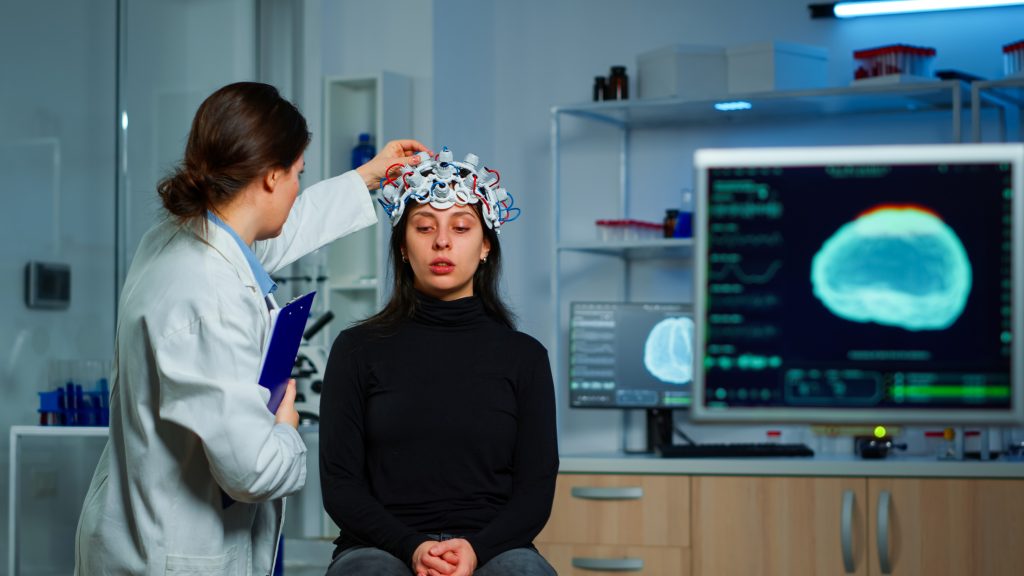
In 2025, advancements in Brain-Computer Interface (BCI) technology began transforming the field of neurological rehabilitation. This case explores how a healthcare innovation company utilized non-invasive BCI systems to restore motor control and communication abilities in patients affected by stroke and spinal cord injuries.
Challenge
Traditional rehabilitation methods often face limitations in restoring full motor function after severe neurological damage. Patients with paralysis or speech impairments have few communication options, leading to emotional distress and limited independence.
The challenge was to design a system that could translate neural signals into precise digital or physical actions — enabling real-time interaction between the brain and assistive devices.
Solution
The development team integrated EEG-based BCIs with machine learning algorithms capable of decoding motor intention signals. Patients wore a lightweight neural headset that detected brain wave patterns corresponding to movement attempts.
These signals were then translated through a trained algorithm into physical commands controlling robotic limbs or on-screen cursors.
Additionally, AI-assisted calibration allowed the system to adapt to each patient’s neural patterns, significantly improving signal accuracy over time.
Implementation
-
Conducted clinical testing on 20 post-stroke patients.
-
Deployed adaptive algorithms that improved interpretation accuracy by 35%.
-
Integrated haptic feedback to provide a sense of control to users.
The integration process involved close collaboration between biomedical engineers, neuroscientists, and data scientists to ensure safety and usability.
Outcome
Within three months of consistent BCI-assisted therapy:
-
70% of participants regained partial voluntary control over affected limbs.
-
Communication latency (in BCI-to-speech systems) reduced from 3.2 to 1.1 seconds.
-
Patient engagement and therapy adherence improved by 45%.
Impact
This project demonstrated that BCIs can bridge the gap between neuroscience and rehabilitation, helping patients regain independence while reducing long-term care costs.
The success also highlighted how scalable, cloud-integrated BCI systems can be deployed in rehabilitation centers globally.