
The AI Revolution Marches On: From Chatbots to Creative Partners
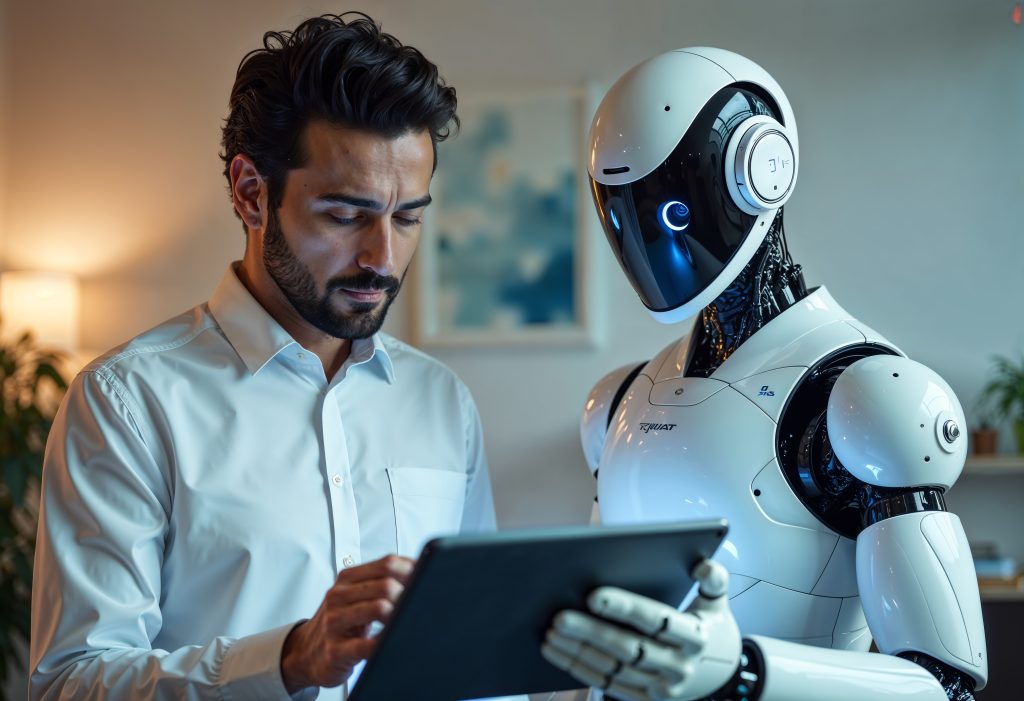
From memory upgrades to phone-based brains, AI is becoming a more personal and powerful partner.
The world of Artificial Intelligence never stands still. This week, for example, brought us exciting steps towards AI that feels more natural and helpful. In short, the technology is moving from a simple tool to a true collaborative partner.
Let’s break down the key developments in simple terms.
AI Gains Senses: The Multimodal Revolution
The biggest trend right now is “multimodal” AI. This simply means AI that can understand more than just text. Now, it can process images, sound, and video together.
Think of it like giving AI human-like senses.
-
Real-World Example: Imagine you’re cooking. You could show an AI a photo of your fridge’s contents. Then, you could ask, “What can I make with these ingredients?” The AI would see the food and read your request. Next, it would suggest recipes and even a shopping list for missing items. Apps like Google Lens and creative tools like Runway ML are already using this. This makes AI incredibly useful for everyday tasks.
Your AI Now Remembers: Personalized Help
A major frustration with early chatbots was their lack of memory. They would forget your preferences immediately after a conversation.
This is changing fast. The new goal is AI with a lasting memory.
-
Real-World Example: Suppose you tell your writing assistant, “Always use a formal tone in client emails.” A smart AI will remember this instruction forever. Consequently, every time you ask it to draft a client email, it will automatically use the right tone. This turns a generic tool into your own personalized helper. Companies like Notion are building this directly into their apps to save you time.
Powerful AI Fits in Your Pocket: Small Language Models
You don’t always need a giant AI for every job. This is the idea behind “Small Language Models” (SLMs). These are efficient, compact AIs that can run directly on your phone or laptop.
The best part? They don’t need a constant internet connection.
-
Real-World Example: Apple is working on putting SLMs into iPhones. This means your phone could do advanced tasks without sending data to the cloud. For instance, your keyboard could perfectly predict your next sentence. Or your photo app could create albums by recognizing your friends and family. Therefore, you get more privacy, faster responses, and reliable help anywhere.
Why This Matters for You
All these updates have one clear goal: to make AI more intuitive and woven into your daily life. Ultimately, it’s not about talking to a robot. Instead, it’s about having a capable assistant that sees what you see, remembers what you like, and works anywhere you go. The future of AI is personal, private, and powerfully helpful.