
Cognitive Control Systems for Smart Environments
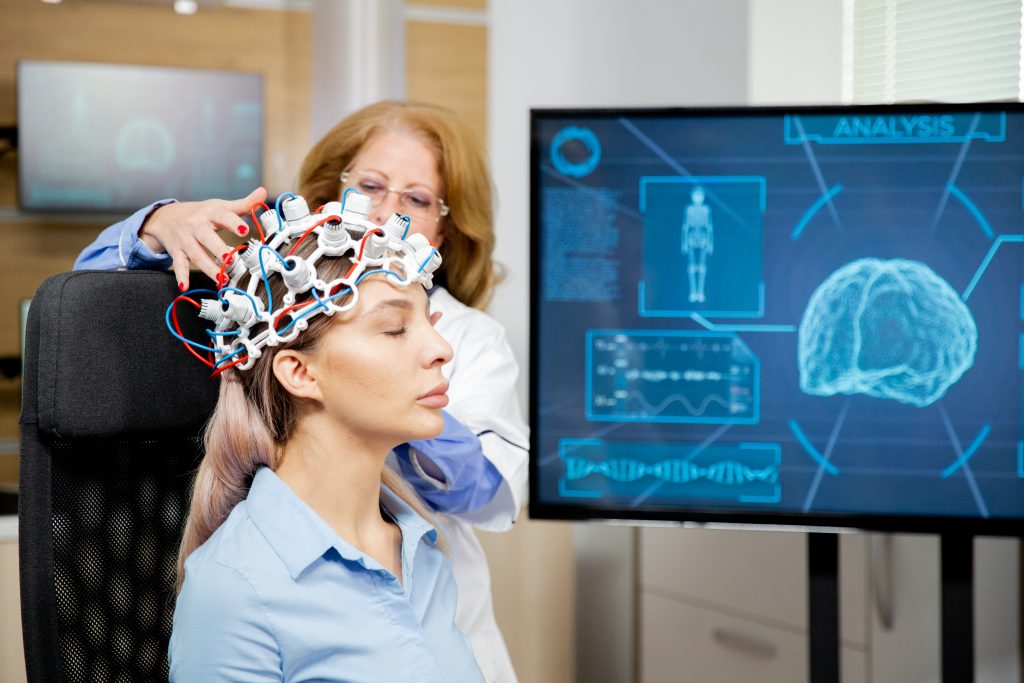
This case focuses on the use of Brain-Computer Interface technology in smart home and workplace environments, allowing users to control connected devices using thought patterns alone. The project aimed to build a seamless, secure, and intuitive interface between human cognition and IoT systems.
Challenge
The growing demand for touchless, personalized environments called for a control system that could bypass traditional voice or gesture-based commands.
The core challenge was enabling a high-speed, low-latency neural interface that interprets user intent accurately without invasive procedures — all while maintaining robust cybersecurity standards.
Solution
The development team created a non-invasive BCI-IoT integration framework combining:
-
EEG-based neural headsets for thought command recognition.
-
Edge computing nodes to reduce response latency.
-
Encrypted cloud synchronization for device coordination and user data protection.
Users could think about an action such as adjusting room temperature or opening digital workspaces — and the system would execute it instantly using pattern-recognition AI.
Implementation
-
Conducted pilot deployment across 10 smart office setups.
-
Developed adaptive AI models that learned each user’s neural command set.
-
Integrated multi-layered encryption to safeguard neural data transmissions.
The system was designed for real-world environments, requiring minimal calibration and supporting multiple users simultaneously.
Outcome
-
Average command recognition accuracy reached 92% within two weeks of training.
-
System latency dropped below 300 milliseconds, ensuring near-instant responsiveness.
-
User satisfaction ratings exceeded 90%, citing improved accessibility and reduced interaction fatigue.
Impact
This initiative illustrated how BCI can transform the way humans interact with connected ecosystems, from smart homes to industrial automation.
By enabling control through cognitive intent, BCIs are redefining digital interaction, accessibility, and user experience design in the emerging era of neuro-technology integration.