
A Practical Framework for Integrating LLMs into Your Enterprise Workflow
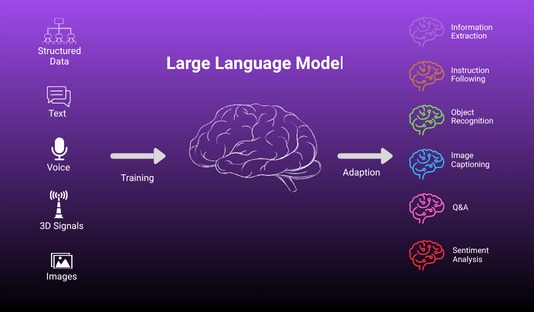
The buzz around Large Language Models (LLMs) is deafening. Every day, a new demo promises to revolutionize how we work. But for every successful enterprise AI implementation, there are a dozen proof-of-concepts (POCs) languishing in a Jupyter notebook, never to see the light of day.
The chasm between a cool demo and a production-ready system is wide. At TechsurgeAI, we believe the key to crossing it isn’t just better models, but a better process. Here is our practical, four-phase framework for integrating LLMs into your enterprise workflow.
Phase 1: Discovery & Problem Definition (Start with the “Why”)
Before writing a single line of code, you must identify the right problem. An LLM is a solution; first, you need a high-value problem.
-
Focus on Augmentation, Not Replacement: Look for tasks that augment human intelligence, not replace it. Ideal starting points are often “grunt work” tasks that are time-consuming but require some cognitive load.
-
Good Example: Automating the first draft of a sales proposal by pulling data from a CRM and a product database.
-
Bad Example: Replacing your entire customer service team with a chatbot.
-
-
Quantify the Value: What does success look like? Is it a 30% reduction in time spent on report generation? A 15% increase in lead qualification quality? Define clear, measurable KPIs from the outset.
Phase 2: Prototyping with Guardrails
This is where you build your POC, but with a critical twist: build the safety rails first.
-
The Prompting Layer: Start with sophisticated prompting (e.g., Chain-of-Thought, Few-Shot) using APIs from OpenAI, Anthropic, or open-source models via Hugging Face. This is fast and cost-effective for validation.
-
The Grounding Layer: This is non-negotiable. Implement Retrieval-Augmented Generation (RAG). RAG allows your LLM to fetch information from your private, up-to-date internal databases (like your company wiki, SQL database, or document store) instead of relying solely on its static, pre-trained knowledge. This combats hallucination and keeps answers relevant.
-
The Evaluation Layer: How do you know if the LLM’s output is good? Create a robust evaluation framework. This can include:
-
Heuristic Checks: Does the output contain the right keywords or data points?
-
Model-Based Evaluation: Use a smaller, cheaper LLM to score the output for relevance and accuracy.
-
Human-in-the-Loop (HITL): Have domain experts review a sample of outputs to create a golden dataset.
-
Phase 3: Production & Orchestration
Your POC works. Now, it’s time to make it robust.
-
Orchestration is Key: Use frameworks like LangChain or LlamaIndex to manage the complex workflows between your application, your data sources, and the LLM. They handle the chaining of prompts, API calls, and data retrieval.
-
LLM Ops: Treat your LLM pipeline like any other critical software component. Implement:
-
Logging & Monitoring: Track latency, cost, and token usage per request.
-
Caching: Cache frequent, similar queries to reduce cost and latency.
-
Versioning: Version your prompts, your data sources, and your model choices.
-
Phase 4: Scaling & Optimization
This is the continuous improvement phase.
-
Cost Optimization: Experiment with model distillation (using smaller, specialized models) and strategic routing (sending simple queries to cheaper models and complex ones to more powerful, expensive ones).
-
Fine-Tuning: For tasks requiring a specific style, tone, or deep domain knowledge, consider fine-tuning an open-source model (like Llama or Mistral) on your proprietary data. This can yield higher performance than prompting alone, but requires more data and expertise.
Conclusion: The Future is Integrated
The true power of LLMs won’t be found in standalone chatbots, but in their seamless integration into the tools your team already uses—your CRM, your email client, your design software. By following this disciplined, phased approach, you can move beyond the hype and start building the intelligent, efficient, and reliable workflows that define the modern enterprise.